The Courage to Try
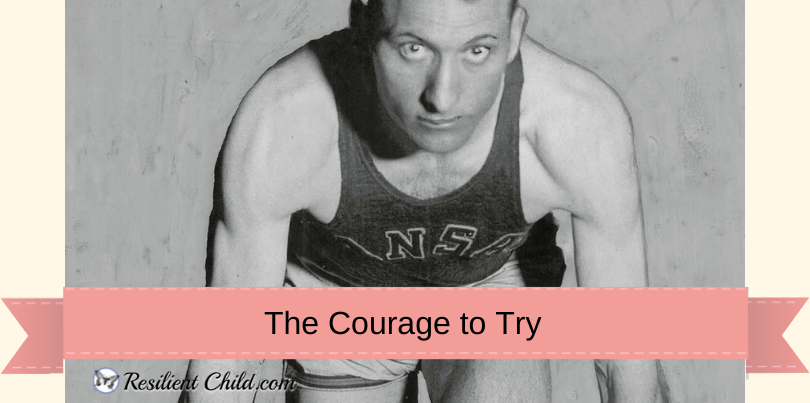
This story begins on February 9, 1917, in the one room schoolhouse in Elkhart, Kansas. The Cunningham family lived closer to the school than the other students, so they were given the task of arriving early and getting the old pot-belly coal stove that kept the school warm ready for the day.
Four Cunningham children arrived early that cold winter morning. One brother and a sister stayed out in the yard, while Glenn, 7 years old, and his older brother Floyd, 10 years old, entered the school.
As usual, the boys picked up the five-gallon fuel container. Unbeknownst to them, the container was filled with gasoline that day rather than the kerosene they always used to start the fire. Unfortunately, there were still hot coals in the bottom of the stove from a meeting that had been held at the school the night before. When the boys added the gasoline, there was an immediate explosion, and they were both seriously burned.
Their siblings in the schoolyard saw the flames and rushed into the school. They got Glenn and Floyd out, then helped them walk the two miles to their home.
The local doctor came to the home to treat both boys. Afterwards, he gave their parents the prognosis. Floyd was going to die, and Glenn needed to have both of his legs amputated and would be crippled for life. Nine days later, Floyd died.
Glenn heard the doctor and pleaded with his mother not to let him amputate. He had lost the toes on his left foot and all the flesh on his knees and shins. The transverse arch on his foot was nearly destroyed. His mother listened to her son and refused permission for the surgery.
Glenn’s struggles were just beginning. For two years he was confined to his bed, suffering intense pain and fighting dangerous infections. Glenn described his pain, suffering, and determination like this:
“Slowly, I pushed my pain-wracked body upright in bed. Bracing myself, I moved my right leg one inch toward the edge of the bed … then another inch … then the left limb the same way. Finally, I got both badly burned legs over the edge and onto the floor. … Sweat broke out on my body. My head was reeling … how my legs hurt!”1
As he slowly began to improve, Glenn learned to stand, walk a step or two, and eventually run. His training methods were unique and unusual but effective. After getting strong enough to stand, support his weight, and walk short distances, he would hang onto the tail of one the family’s mules or cows and try to keep up as it pulled him.
Glenn’s efforts paid off as he went on to become the premier miler of his day. He won the Kansas state high school championship for the mile run, the national high school championship, two NCAA titles, and ten AAU national titles. He also ran in two Olympics, earned a PhD., and purchased a farm where for the next 30 years he invited wayward boys to join him, learn to work hard, be productive, and get their life in order.
Glenn’s ability to face his adversity, along with his positive attitude, are what made him stronger. He said, “As long as you believe you can do things, they’re not impossible. You place limits on yourself mentally not physically.”2
Glenn Cunningham had resiliency. He had the courage to try and to keep on trying. He bounced back from challenges that plagued him all his life without letting them defeat him. He set a great example of how developing resiliency helps us gain not only the strength to meet our current challenge, but also the others that come our way.
The result of Glenn’s perseverance was a personal resilience that lasted a lifetime. One of the greatest gifts we can give to our children is the courage to persevere when meeting their challenges.
Happy Failing Forward,
Calvert
Tanner, B. Cunningham’s character made him a champion. The Wichita Eagle, April 5, 2004.
2 Ibid.
Share This Article:[sgmb id=1]
