Guess what Dr. Flowers taught?
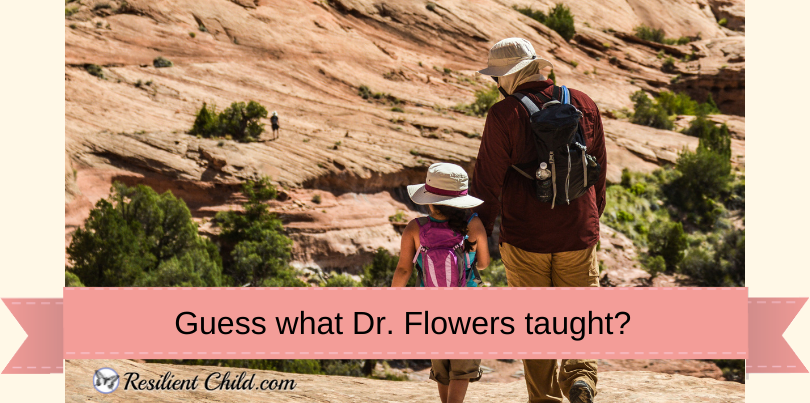
Botany, of course! I remember my dad telling me about his botany professor, Dr. Bradnum Saville Flowers, as Dad and I hiked together and he taught me the names of flowers as we passed them on the trail.
Dr. Flowers reportedly couldn’t stand either of his given names, so he was affectionately known as Bill and loved the humor of being the botanist named Dr. Flowers.
So it should not surprise you that when I needed one more science credit to graduate from college, I signed up for a botany course, Spring Flowers of the Wasatch. It became an instant favorite. Each week we went on a field trip, starting at the Great Salt Lake, the lowest point in our mountain valley, then exploring higher and higher elevations as spring unfolded. We gathered our samples and learned to dissect and categorize them.
In his usual low key manner, Dad found ways to support me in my “blooming” interest. He helped me build a flower press to dry my samples. When I was disappointed at the prospect of missing our annual spring family trip to the red rock country of southern Utah, he suggested that I propose to my professor that I undertake a special collection of desert blooms instead of attending the scheduled fieldtrip. She was thrilled with the idea, and Dad took time to help me scramble all over the desert hunting for samples, identifying and preserving them.
Later that summer Dad and I took a long planned backpacking trip through the Uinta mountains. My botany course was long over, but he offered to carry my dissection tools, flower press, and the heavy paper copy of the dichotomous key I needed to classify plants. Each morning I awakened in the high altitude chill to the crackling sounds of Dad coaxing a small flame to life. He would have been up fly fishing before dawn and was getting ready to cook what he knew was my favorite breakfast, freshly caught trout and hot cocoa.
In a recent article published by UC Berkeley’s Greater Good Science Center, Eugene Roehikepartain of the Search Institute notes that although parents generally understand it’s important that children feel loved, many don’t really know how to show the love they have for their kids. He suggests five practical ways, and I notice that Dad was quietly going about doing them all:
- Express care
- Challenge growth
- Provide support
- Share power
- Expand possibilities
Read the list again. Notice that everything on it is something all of us could learn to do. There is nothing mysterious or out of reach.
Now ask yourself which of the five is your greatest strength? Which is most challenging for you? Can you imagine how doing one thing on the list just a little more might help your child feel your love, just a little bit more?
And what could happen then?
Here’s to more resilient wins at home and school,
Anne
Share This Article:[sgmb id=1]
