The Blue Plate Special
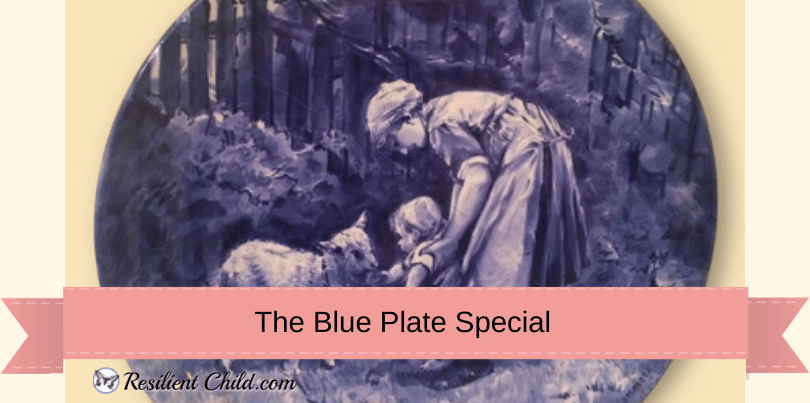
It was a hectic day in our home, which was not unusual in a big family. The exact details of how it all started have been lost in the shuffle, but one of my sibs, whose identity is mercifully forgotten, broke something belonging to another. Tempers flared and angry words were exchanged. Mom brought all of us kids together and gave us a nice little lecture on the virtue of forgiveness, patiently explaining that accidents and mistakes happen, that we shouldn’t let ourselves get upset, that family relationships are more important than material things, etc., etc., etc. You’ve heard it all before.
It’s what happened next that made that day different from all of the rest. Everyone had soon forgotten the squabble, as kids so often do, and were playing happily together when, in the commotion, Mom’s beautiful blue plate that was hanging on the wall crashed to the floor. This plate was a gift of love and appreciation from our dad. With tears streaming down her face and pain in her voice, Mom gathered us together once again, and shared her difficult lesson. “It is so much easier,” she confessed, “to speak of forgiveness when it is someone else’s prized possession.” The pain of the loss is real, and that is what makes choosing to forgive so powerful.
Dad glued the plate together as best as he could, and hung it back on the wall. The Blue Plate became a family symbol of putting things in perspective, forgiveness, and love. When Mom passed away in 2012, the patched Blue Plate was one of her cherished possessions, carefully preserved for future generations.
That day, Mom experienced a deep surge of empathy as she really put herself in the other person’s shoes. Empathy puts the ability to forgive on the fast track, even though it may still take some time to get through the feelings of hurt or loss.
You can practice seeing the world through others’ eyes with your child. Go to the food court at the mall, the park, or any place near you where people gather and walk (licking an ice-cream cone or munching on a crisp apple while you’re there can make this even more fun). Take turns picking out people, describing how you think they are feeling, and how you can tell. “I think that little boy is tired and bored. I can tell by how he is whining and dragging his feet.” Developing empathy when we’re not upset or involved makes it easier to have empathy and choose forgiveness when we are.
Empathy and forgiveness go hand in hand. Together, they help us develop a deepening respect for self and others, free us from carrying the burden of grudges and regrets, and strengthen our ability to embrace the opportunities and challenges of life resiliently.
Imagine the freedom your child will experience when they know without a doubt that no matter what happens, they can let it go, forgive, learn, and move forward.
Here’s to more resilient wins at home and school,
Anne
PS Want to help your kids have less stress and more success at home and school? CLICK HERE to get a copy of our book, The Resiliency Toolkit: A Busy Parent’s Guide to Raising Happy, Confident, Successful Children.
Share This Article:[sgmb id=1]
