I Am ME and I Am Unique!
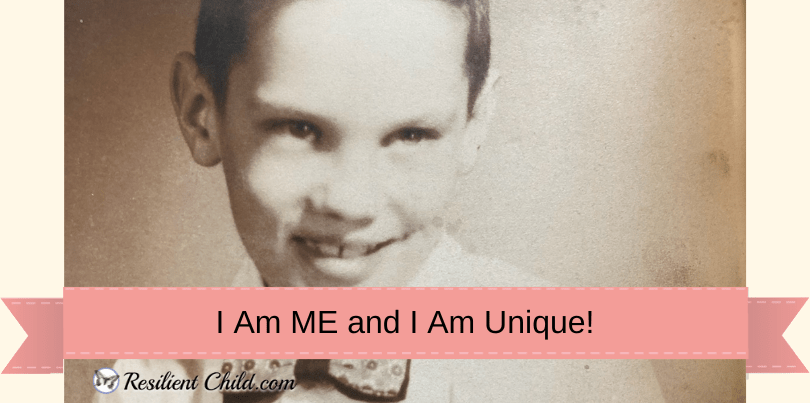
I have Tourette syndrome (TS) and I know what it is like to be different and to have people stare at you and to be self-conscious. I also know that it is possible to live with differences and how to survive and move forward when rude people stare and whisper to the person next to them. I have learned to live my life accepting my TS as being part of who I am and not worry about how different I am. I have developed a good self-esteem and coping skills as well as the ever-faithful coping skill called HUMOR. I have learned how to survive difficult situations and make people comfortable being around me.
While I don’t remember being teased as a child (my TS became much worse when I entered adulthood) nevertheless I can relate to those children who have Tourette and are teased by their peers. I also recognize that there are many other children who do not have TS and are teased and made to feel like misfits for their own way of being different or unique.
Over the years I have often wondered what makes one person normal and another person a “misfit”. Is it skin color, weight, clothes, social status, money, looks, being confined to a wheelchair, or a myriad of other things that may be physical or emotional or social? Why can’t people affected with some of these challenges be normal?
My TS first manifested itself when I was 8 years old and in the second grade. I have lived with this condition ever since, and I don’t remember what it is like to live without it. For me, pulling faces, opening and closing my mouth, shoulder twitches, blinking my eye as many as 40 to 50 times per minute, excessive throat clearing, along with many other uncontrollable movements are NORMAL.
My normal is someone else’s abnormal and his or her normal is abnormal to me. But why am I considered the misfit? Why are those who are different not “normal”? Who decides what is normal and what is not? Why is it so hard for people who are different to be accepted? Why are they subjected to teasing and name calling and bullying? Why are the offenders so full of righteous indignation and so lacking in thoughtfulness? Why do so many people feel better than others? Parents, have we done anything to contribute to our child’s feeling superior to others who they consider “different”?
In my own life, I have noticed that as people get to know me beyond the surface level, they come to accept me for who I am and not just a person with TS. As they accept me, my tics become less and less noticeable and bothersome to them. This is because I have become a real person and not the sum of my TS. If this phenomenon happens with me, I believe that others who struggle with being labeled a “misfit” might also experience the same results if given a chance.
As parents, how can we help those we love and tutor and want the best for them? Perhaps Rudolph the Red-Nosed Reindeer can provide a teaching moment for us.
In the movie Rudolph the Red-Nosed Reindeer, Rudolph and his friend the dentist are labeled misfits and poked fun at. They decide to cope by running away. Below is part of their song describing their feelings.
We're a couple of misfits
Rudolph was only accepted after Santa Claus faced a crisis and needed him. Why couldn’t Santa, the elves, and the other reindeer recognize his worth before that fateful night when he was so badly needed?
We have the opportunity to strengthen our children, help them overcome their challenges, and teach them how to love and accept themselves. After all, we are not misfits. You are your own special kind of unique, and so am I, and so are we all.
Happy Failing Forward,
Calvert
PS Want to help your kids have less stress and more success at home and school? CLICK HERE to get a copy of our book, The Resiliency Toolkit: A Busy Parent’s Guide to Raising Happy, Confident, Successful Children.
Share This Article:[sgmb id=1]
