Living Life with Dignity
In 1974, I graduated from the University of Tennessee with a Master of Public Health degree and my family moved to Price, Utah to work in my first professional job. We lived in this community for five years. It didn’t take long for me to realize that Price was a great place for me to start my career in public health.
I met Teddy who was part of the same congregation in which I worshipped, and it wasn’t hard to establish a special relationship with him after moving into his neighborhood. Teddy had many struggles and challenges throughout his life. He had difficulty learning to speak, delays in his physical development and other learning problems.
Doctors and other health professionals told his parents that Teddy would likely do poorly in school, and he would be limited in sports or other physical activities. But Teddy had a secret weapon: a mother who was patient with him and worked hard helping him to develop the skills he needed to get along with others and how to become successful.
By the time I met Teddy, he was playing basketball (well enough to have fun in his backyard or with friends at church, but not well enough to be on the school team) and he was doing average work in school. As we became friends we did several things together like shooting hoops, and he often came over to my house just to talk for a few minutes and share whatever was on his mind. We would discuss personal problems, school, challenges he may be facing, or whatever was on his mind. As we got to know each other and a friendship developed he would help me with some work projects for my new job, making and passing out flyers, running errands, putting together information packets, etc.
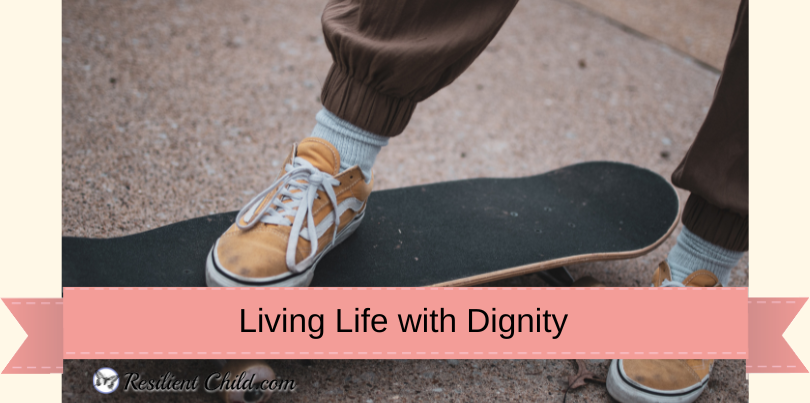
One of the things I remember most about Teddy was the day he got a skateboard, and he came over to my house to show it to me. I admired it and told him what a nice board he had and then he asked me if I wanted to try it out. Of course, I assured him that I didn’t want to ride that thing but ‘no’ was not part of his vocabulary. He talked and talked until I finally gave in and agreed to ride the thing. That was a major mistake because instead of riding it on the level ground in front of our house he wanted me to ride it down the hill close to our house. Now I was petrified of that skateboard.
When we got to the top of the hill (which I remember as being steep and scary but a few years ago we went back to the old neighborhood and saw that it was barely a hill). So, before I took off Teddy asked me to wait while he ran to the bottom so, “I can catch the skateboard when you fall off!”
Believe me that when I stepped on that thing and it started to roll down the hill and it picked up speed I knew that I was going to be killed or end up in the hospital so I jumped (made it look like a fall) and Teddy started laughing, picked up his board when it reached the bottom, and waved as he left for home.
Sometime a few weeks later at about 7:00 a.m. two young neighbor girls knocked on the door. The message they gave me was shocking. They informed me that during the night Teddy died unexpectedly, he was 15. Naturally I was sad and in a state of disbelief as I learned of the passing of my wonderful young friend.
On my lunch hour I went to Teddy’s house to visit and console his parents. I learned the cause of his death and that it was caused by a tumor that grew over the part of his brain that controls breathing. Everything was done for him but medicine couldn’t save him.
Ever since that tragic and fateful day I have believed that Teddy died with dignity. Why? Because he lived his life to the fullest extent possible and he lived with dignity as he accepted every challenge, he faced and moved forward with his life with a positive attitude. He took advantage of his talents and used them to become the best he could be. He refused to feel sorry for himself and he didn’t try to be someone other than himself. He was not wealthy or accomplished or known outside his small community, but he lived his life with dignity, which served him well.
As parents one of the best things we can do for our children is to help them develop dignity by accepting themselves for who they are and then helping them become the best they can become.
Happy Failing Forward,
Calvert Cazier
PS Want to help your kids have less stress and more success at home and school? CLICK HERE to get a copy of our book, The Resiliency Toolkit: A Busy Parent’s Guide to Raising Happy, Confident, Successful Children.
Share This Article:[sgmb id=1]
