Orphanage in Meknes, Morocco
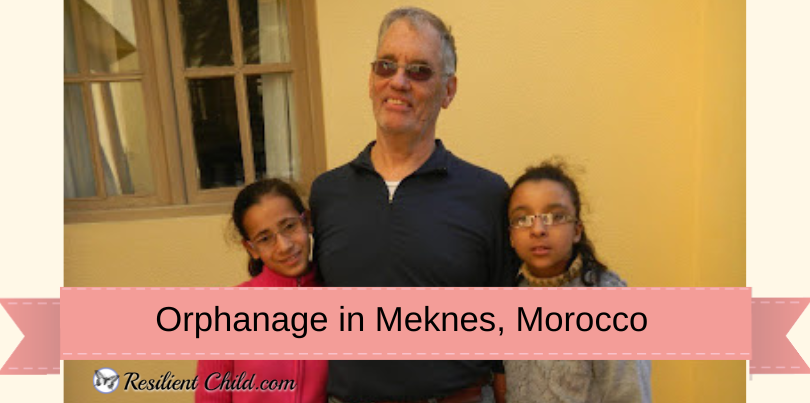
In December 2011 my son Paul, my grandson Calvert, and I boarded a plane in Frankfort, Germany to fly to Rabat, Morocco. We were excited for this trip for two reasons: 1) we had never been there; and 2) we were there to help my grandson complete his Boy Scout Eagle Project.
For his project Calvert raised $3,000 from a spaghetti dinner that he held at his church in Stuttgart, Germany. He had learned of an orphanage in Meknes that needed help with clothes for the orphans. So, with the money he raised, he was able to meet his goal of buying at least one piece of clothing for each child in the orphanage. The orphanage had 240 children aged 6 years old and older and of these children 238 were boys and 2 were girls. We learned that this discrepancy was because boys were much harder to adopt than girls. The two girls that were in the orphanage were both twelve years old and girls this age were also hard to place because they tended to be more mature and set in their ways and were more difficult to handle than younger girls.
Also, in this orphanage there were approximately 12-15 newborn babies in the nursery and there were not enough cribs for all the cribs, so these babies were put on shelves (see the picture in this article).
There was a social worker who was on the orphanage staff who went with us to purchase the clothes for the children. She took us to Fez (which was built in the 9th Century and still had open markets and traders who were willing to bargain for products). She was also familiar with the merchants and she helped negotiate a fair price for the clothes. She knew what clothes the children needed, and we were able to purchase something for each child.
The market was an open market with thousands of people roaming around shopping for food, clothing, and other necessities of life. One of the most fascinating sights in this market was watching the locals get a drink of water. There was a hand pump on one street corner with a wooden bucket underneath it to catch the water. A ladle with a thin chain was attached to a pole which could be used to dip the water from the bucket or the pump. We watched as people would come to the pump. They grabbed the ladle, dipped it into the water, put their lips on the ladle to drink the water, and then put the ladle back. They weren’t concerned about who had used it before them and it didn't bother them that it was never cleaned or wiped out. As thirsty as we were, we couldn’t bring ourselves to get a drink of the water using that ladle. Were we wimps? Based on our cultural experience and knowledge I can definitely say that, “we were not wimps?”
Along with the social worker we took the two young orphan girls shopping with us and we developed a close bond with each of them. These young girls knew that they were doomed to live in the orphanage until they reached the age where they would be turned out and left to forge for themselves.
While shopping and walking through the market these young girls held our hands and they acted as though they didn't have a care in the world but obviously, we knew better. We decided to buy them a treat, so we bought each of them a big chocolate bar. Both girls wanted to hold our hands as we walked down the narrow, crowded streets. We learned that in Morocco it isn’t polite to eat anything with the left hand. We were holding their right hands and so when they wanted to take a bite of their chocolate they let go of our hands, put the bar in their right hand, took a bite, and then put it back in their left hands, so they could use their right hand to reach for our hands and then they would hold on tightly.
It was fascinating watching these people walk the streets of Fez. They had so much less than those of us in this great country, but the happiness and contentment I saw on their faces made me believe that they didn't need all the frills and ‘things’ that we think are necessities to be happy. These people have learned to live with who they are and make the best of what life has given them. The two little girls who accompanied us on our adventure exuded such happiness just to be with us that I was touched. As I thought about their future, I wished that I could take them home so they could be my daughters, but I knew that wasn’t possible. In the three or four hours I was with them I felt a special connection that I still feel today.
As parents of children blessed with much more than the children of Morocco, we could learn a lesson of helping them learn to be grateful and appreciative for what they have. Let’s teach them that the tangible things we are blessed with are nice but true happiness comes from the love we receive from each other.
Happy Failing Forward,
Calvert Cazier PhD, MPH
PS Want to help your kids have less stress and more success at home and school? CLICK HERE to get a copy of our book, The Resiliency Toolkit: A Busy Parent’s Guide to Raising Happy, Confident, Successful Children.

Share This Article:[sgmb id=1]
