Cheese It!
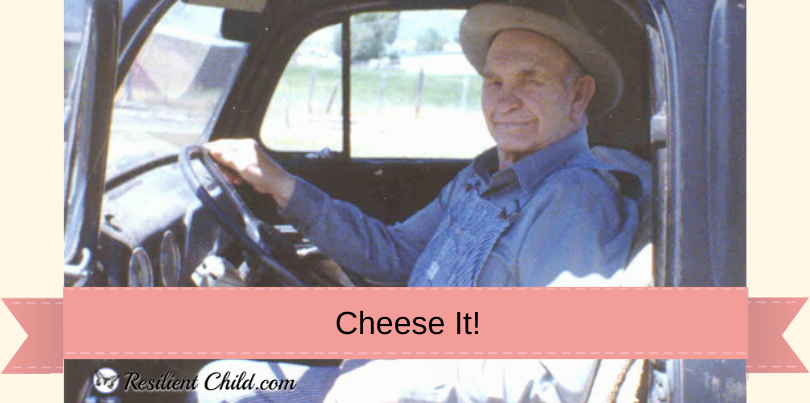
My grandfather Earl Cazier from Afton, Wyoming, was a respected dairy farmer, WWI veteran, father of eight children (two boys and six girls). His children all learned how to work, be respectful, responsible, honorable, and dependable. They learned to love one another, play together, and work together. They loved their parents and knew that their parents loved them.
To say that this family was perfect and never had disagreements or some of the other challenges that many families had would be a misnomer. Of course, like all families they had their share of problems but with two loving, caring parents they always knew to whom they could turn for help, advice, and support.
They also knew when enough was enough and when it was time to settle down and change the discussion or activity and move on with what needed to be said or done.
Whenever things got a little noisy or a disagreement ensued or whenever someone had to be disciplined Earl did it with kindness and under control without using any anger. Spanking or yelling was never part of his discipline regimen. He didn’t need to yell because he got their attention by simply and quietly speaking two words.
No one remembers when Earl started using these words or where they came from, but they all knew what they meant. His magical phrase was, “Cheese it!” This phrase has been part of English language since at least the late-1800s. It’s an old phrase whose origin came to America in the later part of the nineteenth century from the Irish. It’s an informal colloquial expression meaning stop what you are doing.
When grandpa said these words, no explanation was needed because the kids would immediately ‘cheese it’ (or stop what they were doing) and give their full attention to their father.
Everyone in their family knew that when discipline was needed all he would say was “Cheese it!” and they immediately stopped what they were doing. “Cheese it!” was as close to feeling their father’s anger as these children ever experienced. I asked Aunt Lue what would happen if the kids didn’t stop and settle down. She said, “I don’t know because that never happened.” Then she added, “That was about all he ever said!” This is confirmed from personal experience and talking with other family members.
I wonder what it would be like if our children heard us calmly say, “Cheese It” and knew that that was as angry as they would ever hear their parents. If they knew that this was the extent of our anger, would they listen and obey more attentively as we help them with the problem? Having calmness, gentleness, thoughtfulness, a listening ear, and a quiet tone in our voice is something we all would probably love to have or develop. We can put forth the effort to develop these qualities, knowing the benefit our children will receive from this disciplinary approach. The secret is we need to start today.
Happy Failing Forward,
Calvert Cazier
PS Want to help your kids have less stress and more success at home and school? CLICK HERE to get a copy of our book, The Resiliency Toolkit: A Busy Parent’s Guide to Raising Happy, Confident, Successful Children.
Share This Article:[sgmb id=1]
