Four Little Words
A few years ago, I was throwing a rubber baseball to my little eight-year-old granddaughter Alicia. I had known for some time that she had some athletic talent and could be a good softball player if she wanted to be. One of the best things about this is she really enjoyed the game.
As she took a swing that particular evening, I noticed she was holding the bat wrong, so I said something to try and help her. My intentions were good; I didn’t want her developing bad habits. This beautiful little girl became frustrated with her grandpa who wasn’t doing a very good job communicating.
As this disagreement between a sweet little girl and her gray-headed grandfather continued, my son Peter, who was in the room with us, said four words to Alicia, words that cut deep and made a powerful impact on me. He said, “Welcome to my childhood!”
I knew what he was referring to, but nevertheless the words shocked me, hurt me, and caused me to ponder more deeply about my life as a father and grandfather baseball coach.
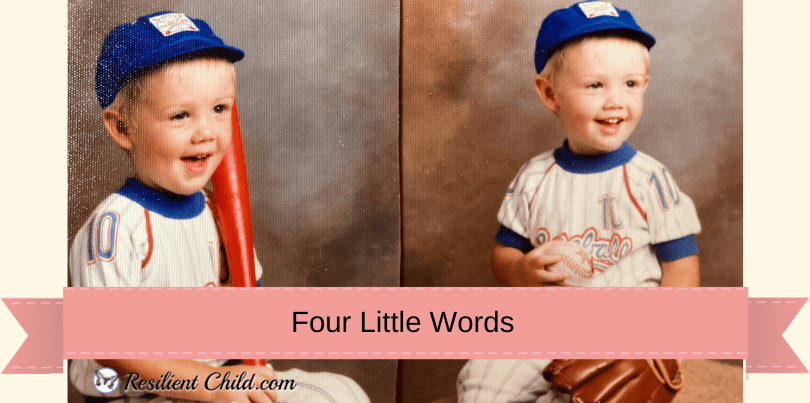
At the time of this incident Peter was 31 years old. When he was a youngster, I recognized his potential in baseball. I always thought he loved the sport because from the time he was a little tyke he carried a little rubber baseball and bat around with him. He often wanted me to pitch the ball to him so he could hit it and make me chase it.
As time went on, Peter developed his skills and became a very good hitter and an exceptional pitcher. I tried to be a good father and encourage him to use his talents and achieve what I thought were his goals. Unfortunately, his perception of my help was of a father who couldn’t be satisfied with his son’s progress and who always found something to criticize. As a result, he felt that he could never live up to my expectations. This created a wedge that I should have repaired before it grew into a chasm.
As a young father, in my efforts to encourage and help Peter, I missed opportunities to create happy experiences with my son. I was not in tune with him and his true desires. Rather than trying to correct minor problems with his batting and pitching, I should have been more sensitive to the many things he was doing right. I learned that there is a time to coach and a time to be a father (or grandfather). They can co-exist, but the lines of demarcation should be drawn, enforced, and not crossed.
While I had never heard Peter verbally say “Welcome to my childhood” before this night I should have recognized that for years he was trying to share this message with me. Unfortunately, when he was younger, I was a father who didn’t understand the message he was trying to share with me. He wanted me to play with him without finding fault. His perception of my help was that he couldn’t do anything right and as a result it created some problems between us.
Today, I believe Peter and I have a good father-son relationship. He still enjoys watching baseball with me, and we love going to games together. Yet there are still little reminders of yesteryear when I was trying to help him be the player that I thought he wanted to be and could be, but I was not the coach I should have been. This fact hit me hard that evening when I was playing with Alicia.
From this experience I learned that to help our children become more resilient we must listen to what they are trying to tell us and be sensitive to their needs. Communication is more than hearing their vocalizations but also hearing what they are saying through their non-verbal communication and actions.
Hearing our children say “Welcome to my childhood” can be a positive message or a negative one depending on how we teach them. Being sensitive and having good, positive communication can certainly impact what messages our children receive. Resiliency and self-confidence can develop when kids know they can speak freely and will be listened to and respected by their parents. We can’t undo the past, but we can learn from it, repair the harm, and prevent making the same mistakes.
Happy Failing Forward,
Calvert
PS Want to help your kids have less stress and more success at home and school? CLICK HERE to get a copy of our book, The Resiliency Toolkit: A Busy Parent’s Guide to Raising Happy, Confident, Successful Children.
Share This Article:[sgmb id=1]
