He Was 92 Years Old
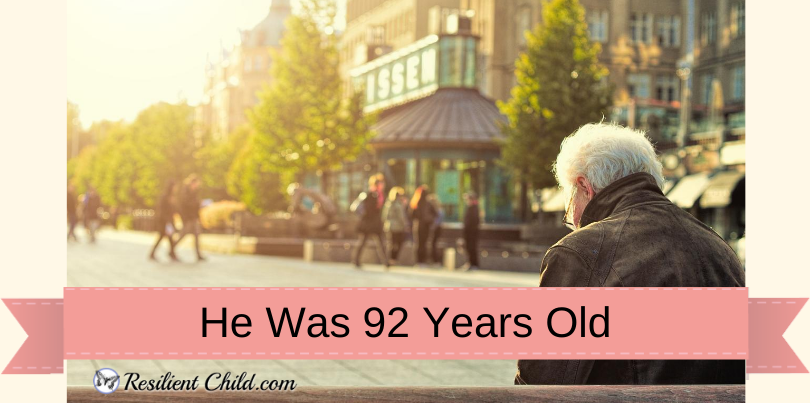
Several years ago, my 13-year-old grandson, Eddie, and I walked to the park near my son’s house in Stuttgart, Germany. Eddie enjoyed writing and dreamed of becoming an author, writing science fiction. He knew I had a little bit of experience writing and wanted to ask me some questions and get some feedback on something he was working on. We decided to buy a German pastry on our way to the park, sit on a bench and enjoy the day while we worked on his project. Our well thought out plan never got off the ground, but our time together was still productive and interesting in another way.
Just after we sat down, an older gentleman, who seemed anxious to talk to someone, approached us and started talking. He was 92 years old and told us fascinating first-hand stories about WWII history from his perspective as a German soldier. His stories held us captivated and gave us an entirely new view of the war.
He spoke decent English, which he claimed to have learned as a prisoner of war while being held in the United States. He had a story he wanted to tell, and we wanted to listen. We asked many questions, which he was more than willing to answer.
He expressed his disdain for Hitler, whom he claimed robbed him of his youth and deprived him of his opportunity to attend the university as a young adult, meet new people and enjoy friendships. Instead he spent those years in the military fighting a war he did not believe in. We could feel his enduring anger, frustration, and yes, even hatred towards Hitler and Germany’s involvement in the war.
We learned that he served in a German Panzer or Tank Division. He was part of the German invasion of Russia and got within 30 kilometers of Moscow before being driven back. I said something about the Russians defeating them short of their goal and for the first time heard some pride in his voice when he said, “The Russian army didn't defeat us. We were defeated by the cold and hunger. It was -50 degrees and we ran out of food.” We were curious, so we asked how they survived and were both surprised and shocked when he told us they ate their dead soldiers.
This is cannibalism, and I had never heard stories about Germans eating their dead. I wasn’t sure I had heard him correctly, so I asked for clarification. He responded with a look that seemed to say he couldn’t understand why we were confused let alone surprised or horrified. In his mind, his original statement fully justified the cannibalism and should have made it perfectly clear and understandable given the realities of the situation. He didn't feel any guilt nor remorse but was extremely grateful that he didn't starve. He reviewed the facts once again, very clearly, “It was -50 degrees outside, the bodies were frozen, they were safe, they could save our lives, so we ate them.”
While some of these details were quite gruesome and not what we were expecting that day, we were also grateful for the opportunity to learn first-hand about the terrors of war and gain a greater appreciation for living history.
Hopefully, we can teach our children to always remain open to learning from the past to create a brighter tomorrow. We can set an example and help them listen to, appreciate, and learn from older generations. We and our children will one day pass on our memories of the events unfolding today to those who come after us. Each of us has our own story to tell. Combined together, our stories will form a greater, more complete and nuanced history of the strange and challenging times in which we now live.
Here’s to All of Us, Across Time and Space, Learning and Growing and Failing Forward Together,
Calvert and Anne
PS You might find these resources interesting:
Share This Article:[sgmb id=1]
