The Wagon Reach
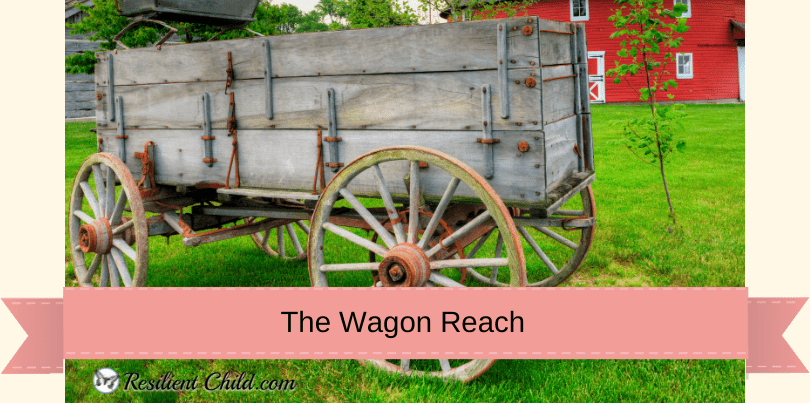
The morning started early as Paul (my father) and Earl (his father) arose earlier than usual to get the cows milked and other chores done before hitching up the team of horses. They are getting ready to go six or seven miles up Grover Canyon to cut firewood to heat the house through the cold winter in Afton, Wyoming. This was not the first time that Paul had gone with his dad up Grover Canyon for wood, and he knew his dad’s expectations for productivity were high, the work was important, time was short, and Earl was not one to waste time when there was work to be done.
Even though the work was hard, and time was short, Paul always enjoyed being with his father, and this day was no different. Earl was a quiet man and said very little as the two of them drove to the canyon and up to where they would be working. Paul loved being alone with his father. He and Earl would have all day together, working, sharing a meal, and talking a little. In fact, when asked what the father and son discussed on these trips my dad replied, “We talked about things we had to talk about and other times we were quiet.” This description of Paul and Earl’s conversations does not surprise anyone who knew Earl.
The work on this particular day was not much different than the other firewood trips Paul took with his dad. They spent the day cutting down dead trees, trimming them with their axes. When enough logs had been cut and trimmed, they loaded them onto the wagon, chaining them, so they would be secure and not roll off as they hauled them down the mountain. They worked hard, sweated hard, stopping only long enough to eat a nice lunch that Paul’s mother had made for them. Earl didn’t believe in leaving with a partial load, nor did he believe in loading the wagon so heavily that the horses struggled to pull it.
With that in mind, they hitched up the horses, climbed on top of the logs and headed for home, knowing that in the morning they would unload and cut up the wood. Earl took the reins and, as he had many times before, turned the horses around and started down the mountain. They were tired but left with a good feeling of having had a productive day.
As they were heading down the canyon, they heard the snapping sound of wood breaking. The unexpected noise scared the horses, who jerked the reins out of Earl’s hands as they took off running down the mountain pulling the wagon’s front wheels behind them. For just a few moments, Earl and Paul just sat there on top of the logs in stunned silence. Nothing was said but they both knew what had to be done. They climbed down to inspect what had broken and discovered that it was the wagon reach, the wooden beam under the frame of the wagon that connects the rear axle with the front axle assembly.
They were tired, hungry, frustrated, and cold but complaining or swearing or becoming angry was not part of either Earl’s or Paul’s disposition. When asked how Earl reacted or what he said, Paul gave a remarkable insight into what his dad was really like as he explained, “He was mainly concerned about the safety of the horses.” All he said to his impressionable son was “Let’s go get the horses” as they started walking down the mountain.
When they reached the bottom of the canyon, a pleasant surprise awaited them. Someone had caught their horses and tied them to a tree. Earl was relieved that someone recognized the potential problems the horses faced and that they were safe. They unhitched the horses from what was left of the wagon, then each jumped on a horse and rode the six or seven miles home. They welcomed the nice hot supper and good night’s sleep awaiting them there.
The next morning started out very similar to the previous one. They got up early, did their chores, then rode the horses back up the canyon, fixed the wagon reach and brought the logs home.
My father learned a valuable lesson from his father about handling stress. He learned and adopted his philosophy for controlling anger and the words he spoke, and for accepting what happened and dealing with the consequences.
Here’s to hoping all of us as parents will learn and model these same lessons for our families,
Happy Failing Forward,
Calvert
PS Want to help your kids have less stress and more success at home and school? CLICK HERE to get a copy of our book, The Resiliency Toolkit: A Busy Parent’s Guide to Raising Happy, Confident, Successful Children.
Share This Article:[sgmb id=1]
